The best low-cost travel destinations are rarely the ones on the front of the brochure. They tend to sit one island over, one city south, or one border across from the famous place. Same coastline, same history, a fraction of the price. Below are five that consistently deliver, followed by the part most budget travelers skip: what trip insurance actually does, and when spending a little on it protects the savings you worked so hard for.
5 Low-Cost Travel Destinations Worth the Flight
1. The Ionian Islands, Greece
Mykonos and Santorini have earned their reputations and their price tags. Head west instead. Corfu, Kefalonia, Lefkada, Ithaca, Zakynthos, and Paxi sit in the Ionian Sea with the same impossible water and a far gentler cost of living.
Rooms in villages away from the main harbor cost dramatically less than the Cycladic islands, especially in the shoulder months of May, June, September, and October, when the sea is still warm and the crowds have thinned. Every town has a supermarket and a bakery, so a studio with a kitchenette cuts your food budget in half.
2. Ohrid, North Macedonia
North Macedonia sits directly north of Greece, and most travelers pass straight over it. Ohrid, on the shore of one of Europe’s oldest and deepest lakes, is the reason to stop: Byzantine churches on cliffs, a lakefront promenade, clear cold water, and prices that feel like a decade ago.
It remains one of the most affordable corners of Europe for sit-down meals, and mornings on the lake are quiet in a way that is genuinely hard to find on the continent anymore.
3. Naples and Southern Italy
The Amalfi Coast, Capri, and Positano are priced for honeymooners. Naples, an hour away, is one of the oldest cities in Europe, the birthplace of pizza, and a fraction of the cost. It is louder and scruffier than the postcard towns, and far more alive.
Use it as a base: Pompeii, Herculaneum, Vesuvius, and the Amalfi Coast itself are all reachable by regional train or ferry as day trips. You get the same sights for the price of a ticket while sleeping somewhere affordable.
4. Indonesia
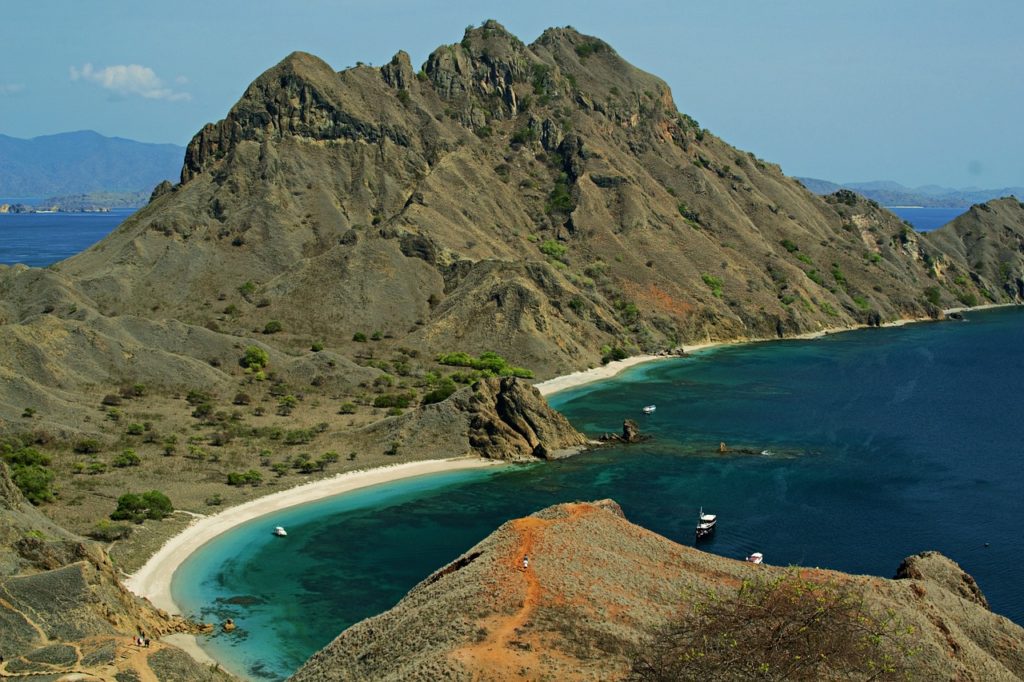
Indonesia remains among the strongest value destinations on earth. Guesthouse rooms, local warung meals, and scooter or driver hire cost a small share of what equivalents cost at home, and the country is enormous. Bali is the gateway, not the destination.
Komodo National Park and the boats out of Labuan Bajo, the temples and rice terraces around Ubud, Java’s volcanoes, and the quieter islands of Nusa Penida and Flores all reward a longer stay. The one real caution: medical facilities outside the major cities are limited, which matters for the insurance conversation below.
5. Peru
Peru packs an extraordinary amount into one country: Lake Titicaca, the floating reed islands of the Uros people, the Sacred Valley, Cusco, Machu Picchu. And outside the permits for Machu Picchu itself, it is inexpensive. Markets sell produce at prices that make cooking a pleasure, buses and taxis are cheap, and the food is one of the reasons to go.
Altitude is the thing to plan for. Cusco sits around 11,000 feet, and altitude sickness sends visitors to clinics every week. Build in two acclimatization days, and read the medical section of your travel policy before you book.
What Travel Insurance Actually Covers
Travel insurance isn’t one product. A typical policy bundles several distinct protections, and the value of each depends entirely on your trip.
- Trip cancellation reimburses prepaid, non-refundable costs when you have to cancel for a covered reason before departure: illness, injury, a death in the family, jury duty, or a named disaster at your destination.
- Trip interruption covers the same situations once you have already left, including the cost of getting home early.
- Emergency medical pays for treatment abroad. This is the one that matters most, because domestic health plans often cover little or nothing outside the country, and Medicare generally provides no coverage overseas at all.
- Medical evacuation pays to move you to an adequate hospital, or home. This is the catastrophic one: an air ambulance from a remote region can run into the tens of thousands of dollars, and no amount of trip savings absorbs that.
- Baggage coverage reimburses lost luggage and the essentials you buy while you wait for it. Useful, but the smallest piece of the package.
- Travel delay coverage picks up hotels and meals when a covered delay strands you.
When Trip Insurance Is Worth It on a Budget Trip
The instinct on a cheap trip is to skip coverage, and sometimes that instinct is right. But the honest test isn’t the price of the trip. It’s what you can’t absorb if the trip goes wrong.
Strongly consider it when:
- You are traveling somewhere with limited medical infrastructure or difficult terrain, such as remote Indonesia or high-altitude Peru.
- You are over 60, or managing any chronic condition. Medical costs and evacuation risk both rise with age, and this is the same logic that leads people to look seriously at coverage designed for older adults.
- You prepaid a meaningful amount that is non-refundable: a tour, a cruise, an internal flight, a permit.
- Your trip has tight connections or a single narrow window, like a Machu Picchu permit tied to one date.
You can probably skip it when: everything is refundable, you are staying somewhere with accessible healthcare, and losing the full trip cost would be annoying rather than damaging.
Full-package policies commonly run somewhere in the range of 4% to 10% of insured trip cost, with age and destination as the biggest variables. On a genuinely cheap trip, that is often a modest number for the medical and evacuation pieces alone.
Check what you already have
Before buying anything, look at what is already sitting in your wallet. Many travel-oriented credit cards include trip cancellation, delay, and rental car coverage when you pay for the trip with that card. Some health plans extend limited emergency coverage abroad. A few homeowners policies extend personal property coverage worldwide, which can cover a camera stolen from a hotel room. Confirm that against what your home policy actually covers rather than assuming.
Buying without overpaying
- Buy early. Coverage for pre-existing conditions and for supplier failure usually requires purchasing within roughly 14 to 21 days of your first trip deposit.
- Insure only what is non-refundable. You don’t need to declare the full cost of the trip, only the prepaid money genuinely at risk.
- If your bookings are refundable, buy medical-only. A medical-and-evacuation policy costs far less than the full package and still covers the risk that should actually worry you.
- Read the exclusions. Adventure activities, motorbike riding, and alcohol-related incidents are commonly excluded, and a scooter is how most people get around Bali.
- Know what “cancel for any reason” really buys. It costs meaningfully more, has to be added early, and typically reimburses only a portion of your costs, usually somewhere around 50% to 75%.
Before You Leave Home
Two small housekeeping items save a lot of trouble. Tell your home insurer if the house will sit empty for more than 30 consecutive days, because many policies restrict coverage for vacant homes and a burst pipe discovered three weeks later is exactly the scenario they have in mind. And if you are traveling with family who depend on your income, an extended trip is a natural moment to check that your beneficiaries and coverage are still current. It’s the same annual review that applies to your broader insurance picture.
Frequently Asked Questions
Does my health insurance work abroad?
Often not, or only in a very limited emergency capacity. Most domestic plans have no overseas provider network, and Medicare generally does not cover care outside the United States. Even when there is some coverage, you typically pay the foreign hospital directly and seek reimbursement afterward, which is exactly what emergency medical coverage is designed to handle.
Is travel insurance worth it for a cheap trip?
It depends on which risk you are insuring. Cancellation coverage on a $600 trip is often not worth it, but emergency medical and evacuation coverage has almost nothing to do with what you paid for the trip. An air ambulance costs the same whether your flight was $200 or $2,000.
When should I buy a policy?
As soon as you make your first non-refundable payment. Most of the valuable optional benefits (pre-existing condition waivers, cancel-for-any-reason, coverage if a tour operator goes under) are only available within a short window after that first deposit, usually 14 to 21 days.
Does travel insurance cover a canceled flight?
Sometimes, and airline compensation rules usually apply first. Travel delay coverage typically reimburses meals and lodging after a waiting period of several hours, and trip interruption may cover rebooking if the disruption is severe. A cancellation because you simply changed your mind is not covered unless you bought the cancel-for-any-reason upgrade.